
Select your language

Metallographic Preparation of Copper and Alloys – Accurate Analysis with QATM

copper1

Metallographic Preparation of Copper and Alloys – Accurate Analysis with QATM

QATM provides comprehensive solutions for the metallographic preparation of copper and copper alloy samples, ensuring reliable, clean, and reproducible results.

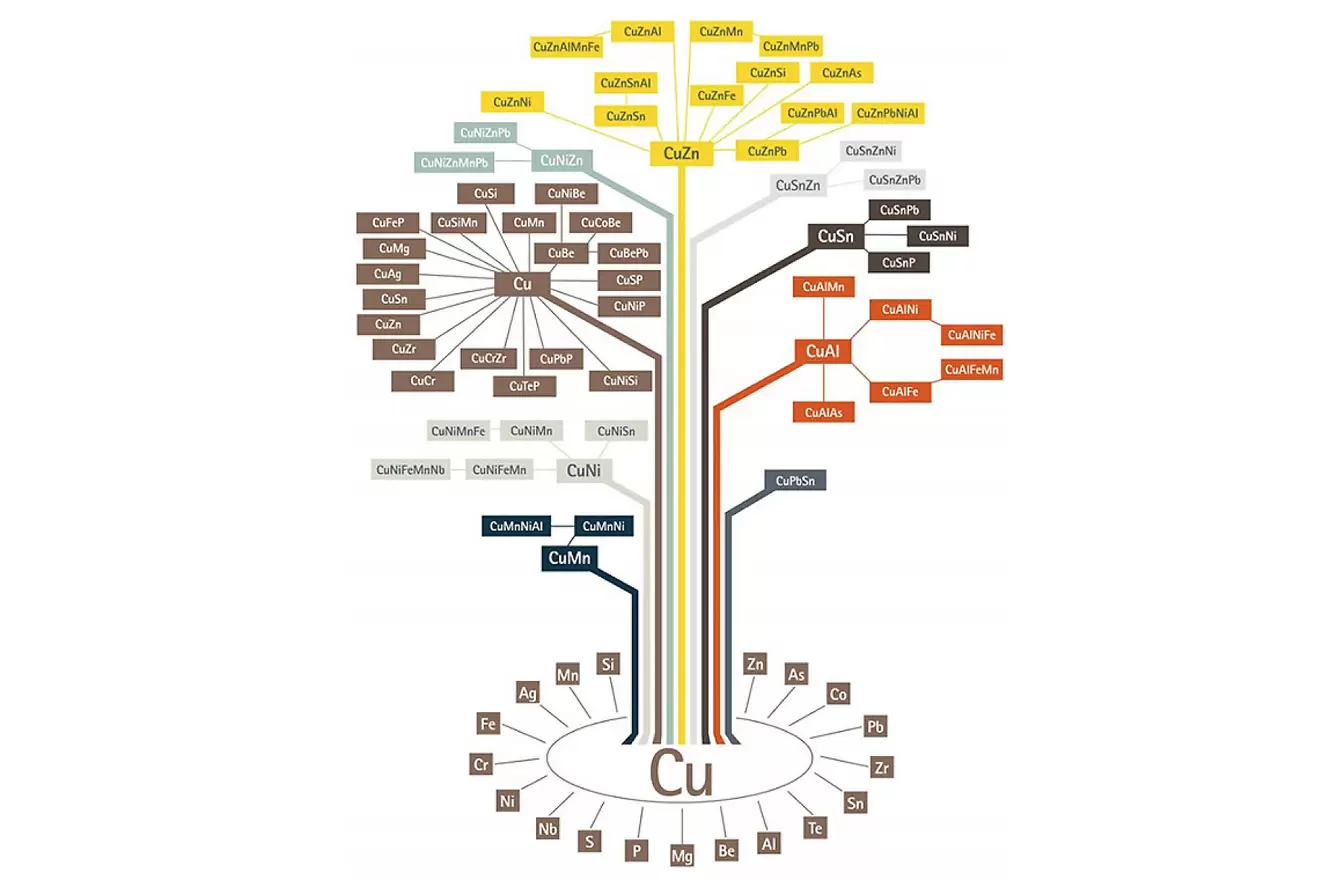
Copper, with a face-centered cubic (FCC) lattice, is distinguished by its softness and ductility, as well as its excellent electrical and thermal properties, making it indispensable for cables, telecommunications, heat exchangers, and cutting-edge applications such as the energy transition (wind turbines, photovoltaics, electric vehicles). At the same time, it is also used for decorative or functional purposes due to its characteristic appearance.

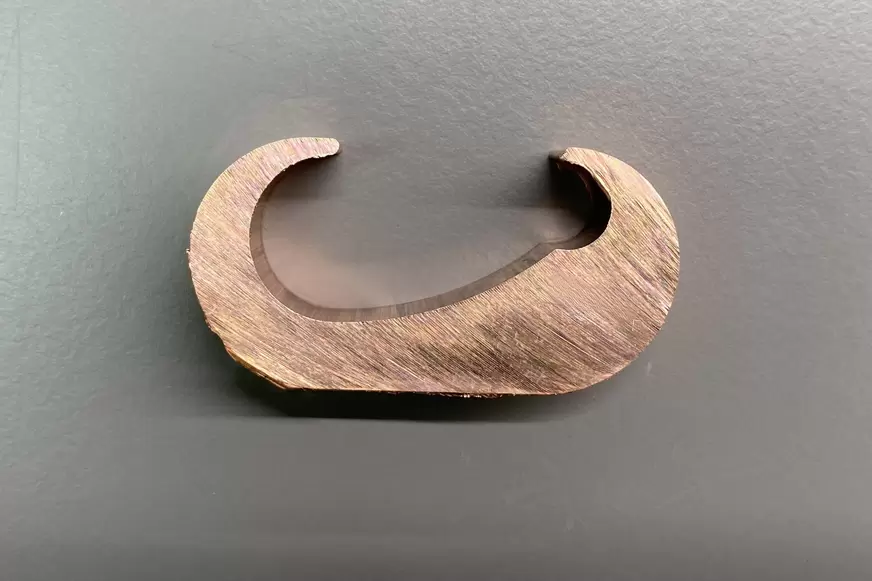
For the study of microstructure – such as grain size, twinning, and oxide inclusions – careful and controlled preparation is required, as copper is particularly prone to deformation and surface alterations. QATM’s equipment and consumables, including cutting, grinding, polishing, and mounting systems, ensure the protection of the material’s structure and the revelation of critical features with maximum accuracy.

With a focus on clarity, reliability, and efficiency, QATM’s solutions support both research and industrial applications, contributing to the understanding and evaluation of the unique properties of copper and its alloys.

Alloys and Properties

  • Brass (Cu-Zn): increased strength, machinability → components, mechanical parts.
  • Bronze (Cu-Sn): corrosion and wear resistance → bearings, shipbuilding components.
  • Cu-Ni: resistance to seawater corrosion and chemicals → heat exchangers, marine applications.
  • Cu-Al, Cu-Si, etc.: improved strength, oxidation, chemical stability.
Alloy Categories
  • Wrought: processed by rolling, extrusion, drawing.
  • Cast: directly from the molten phase, suitable for complex shapes.
Metallographic Preparation of Copper and Copper Alloys

1. Cutting

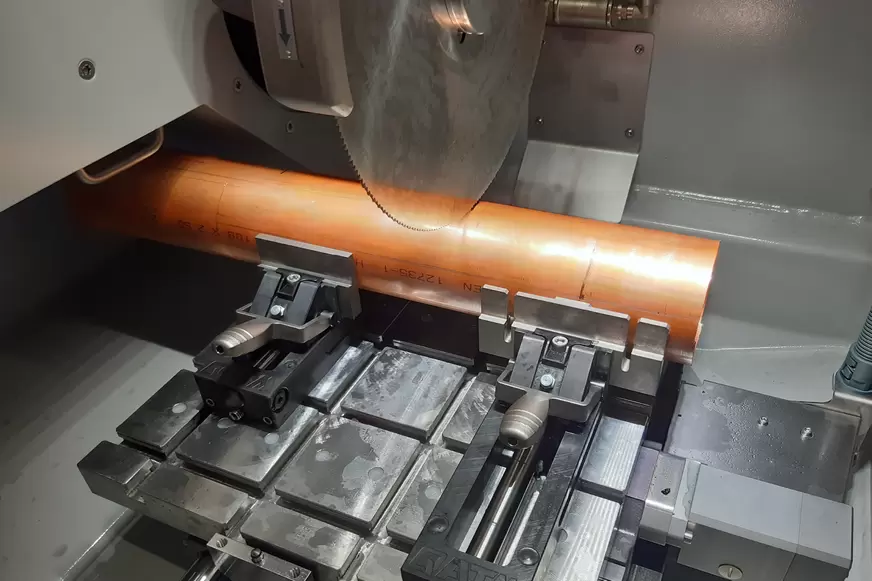
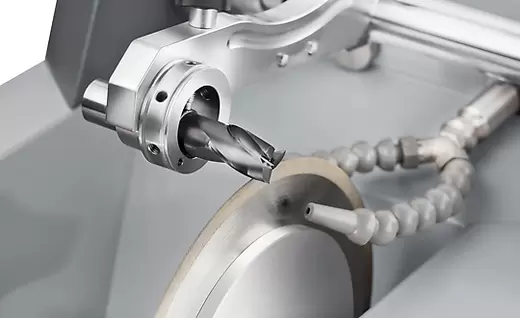
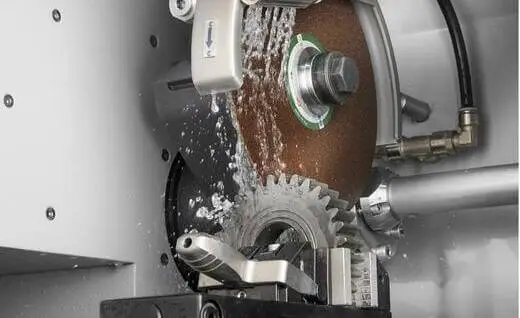
  • Copper and its alloys are soft and ductile, easily cut but prone to deformation, surface smearing, and thermal damage.
  • Clean cutting is achieved with:
    • SiC resin-bonded wheels (NF-A) for clean, low-deformation pieces.
    • Slow cutting speed and sufficient cooling → minimizes thermal damage.
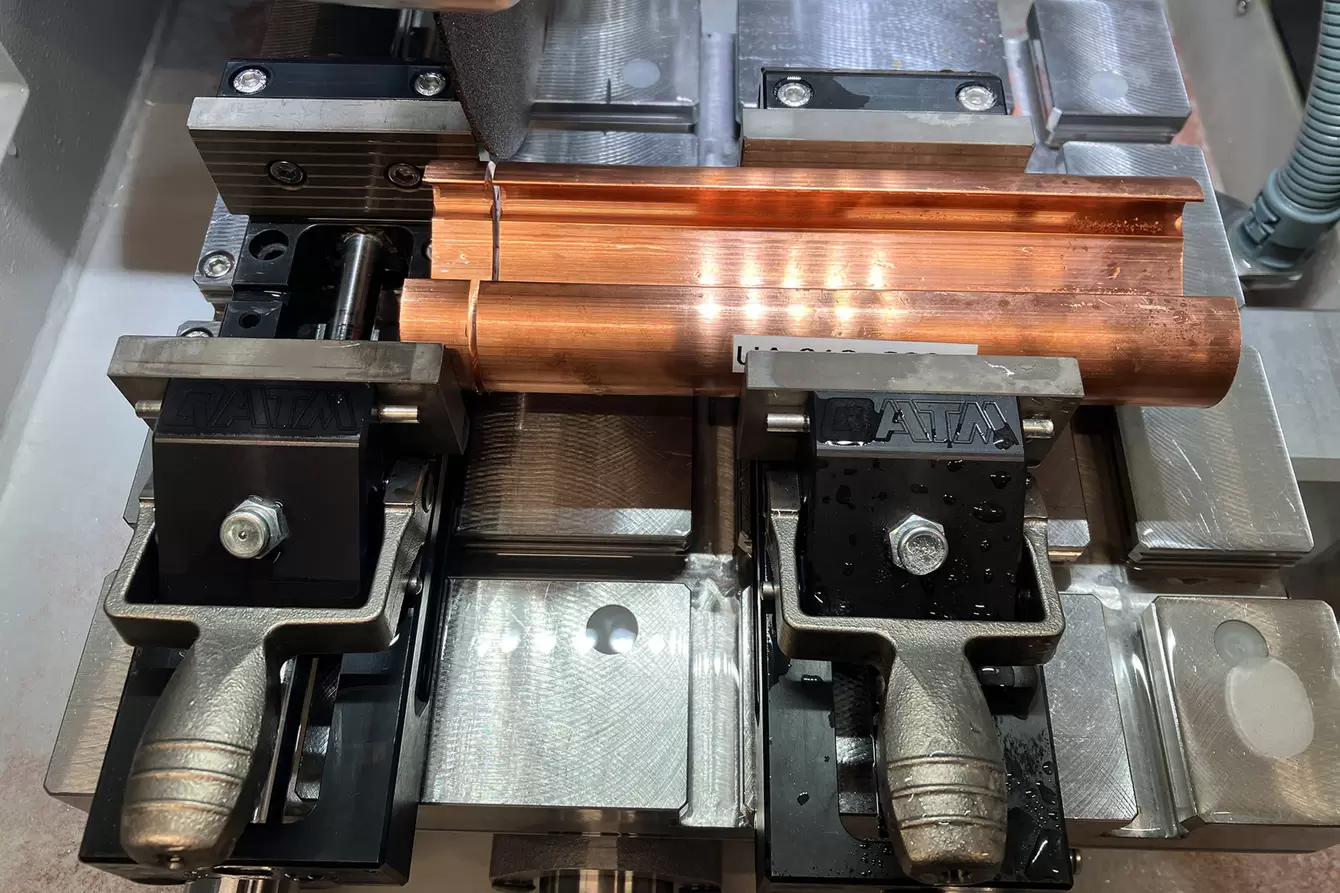
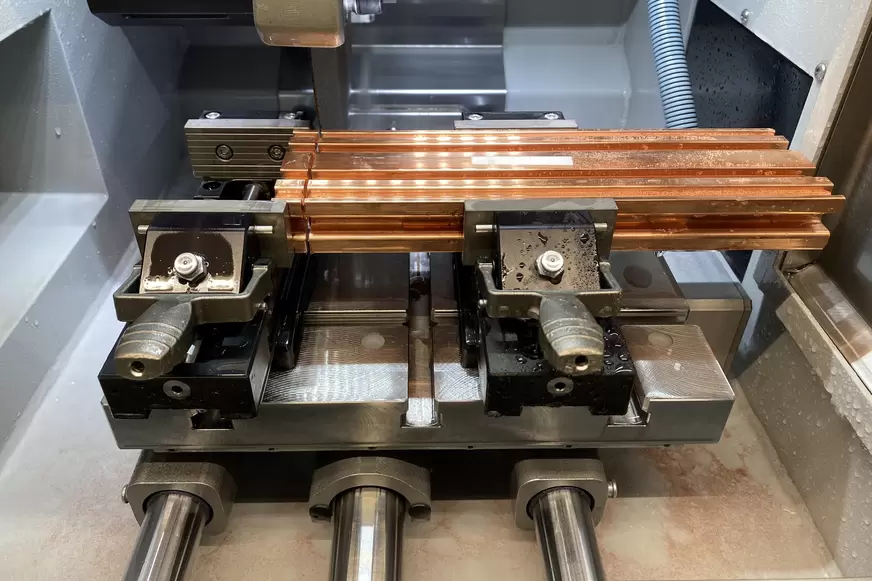
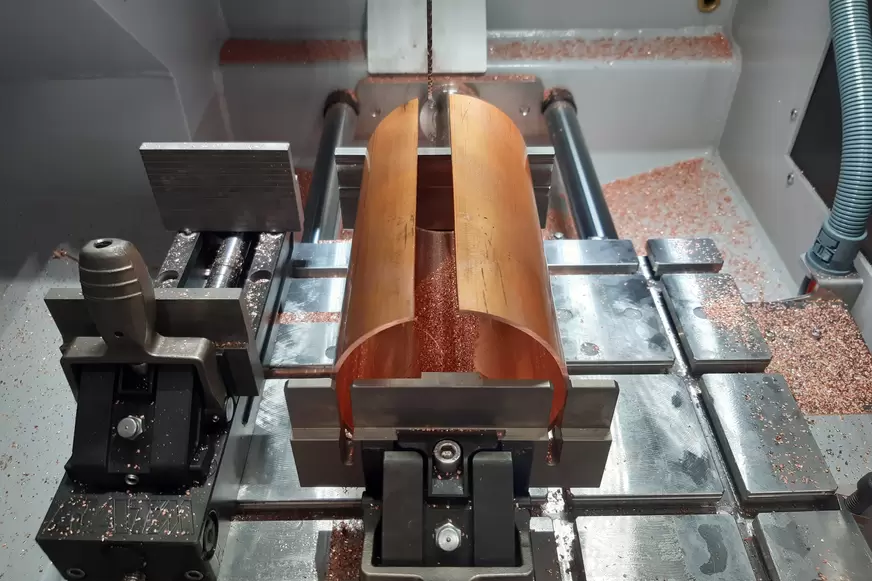
    • Stable but gentle clamping → prevents vibrations and deformation in thin samples (tubes, wires).
  • For thin or sensitive samples (e.g., copper tubes, shells) → pre-mounting before cutting is recommended.

2. Mounting

Goal: support, edge protection, stable handling.
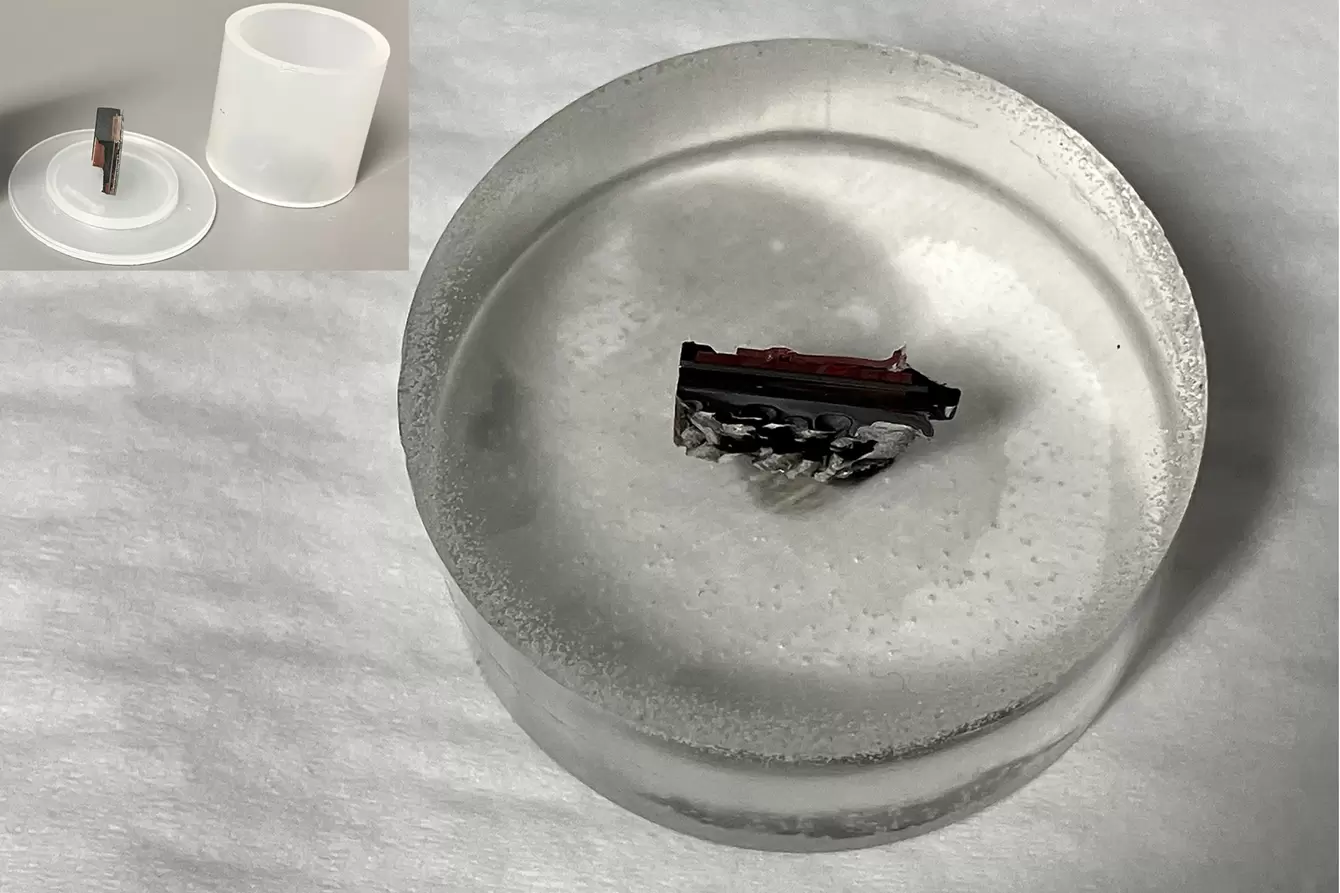
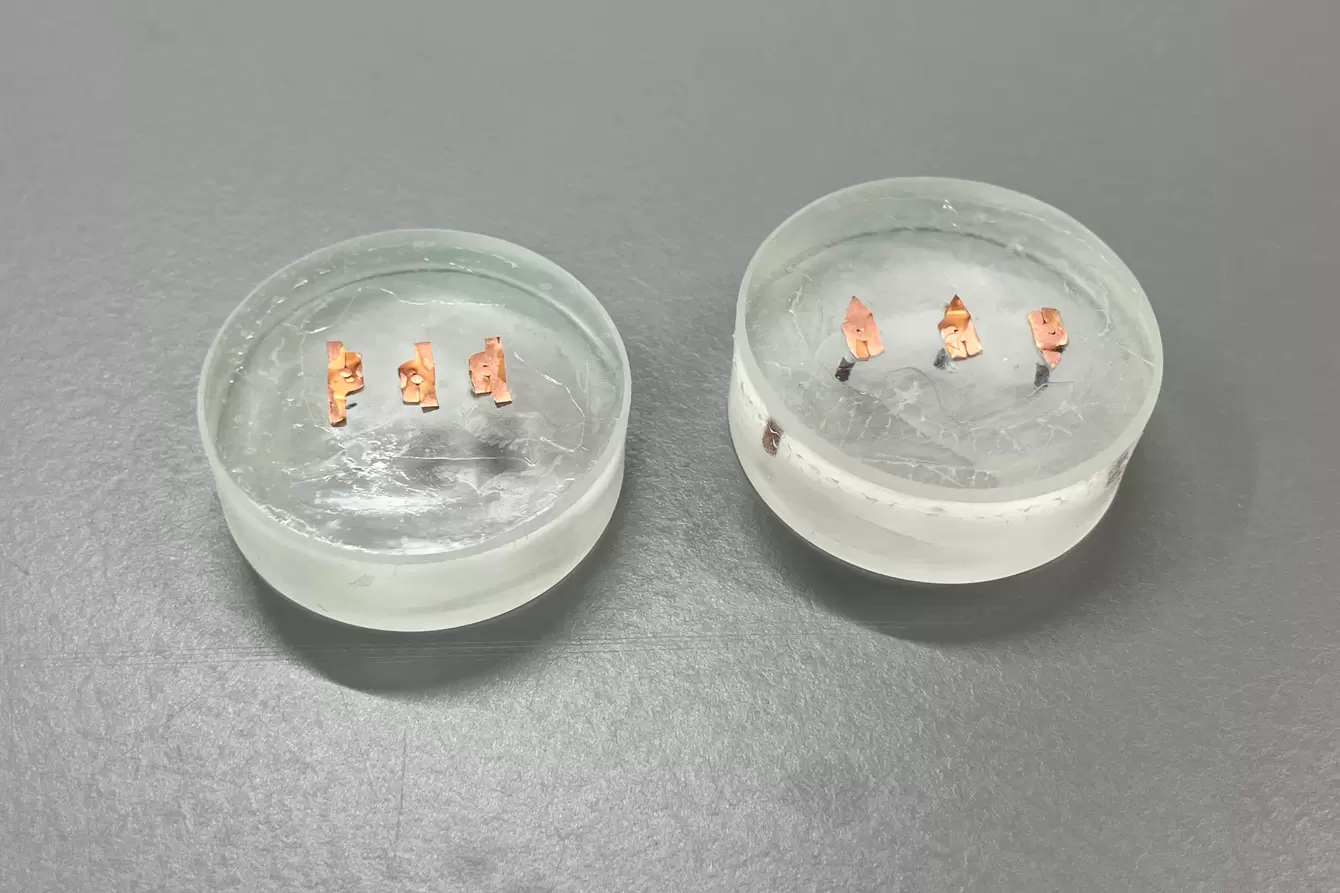
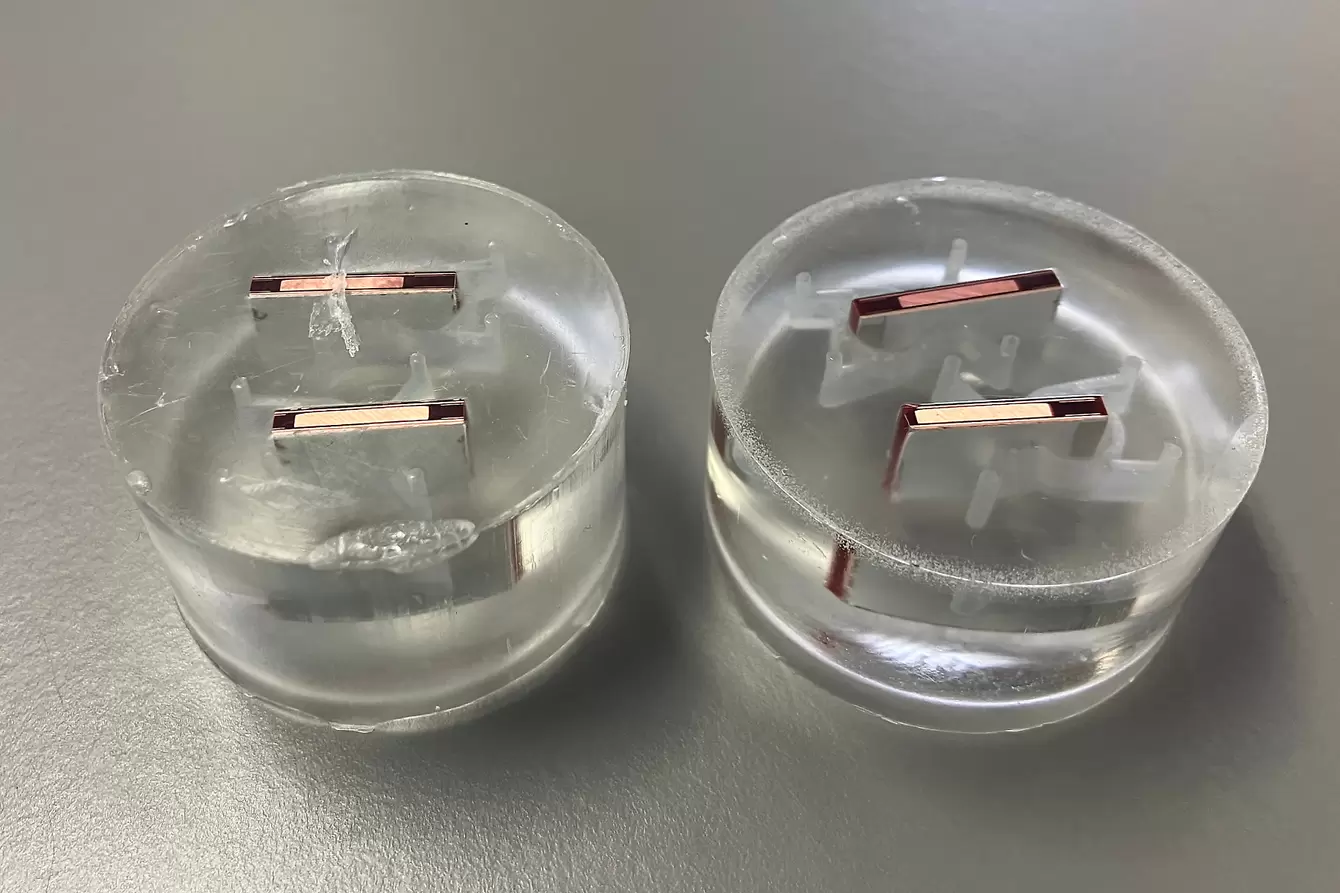
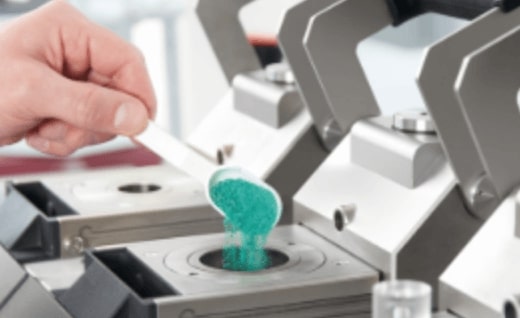
  • Cold mounting (preferred for copper, due to low annealing):
    • PMMA resins (KEM 20/30) or epoxy Qpox 93 (excellent edge retention, minimal shrinkage).
  • Hot mounting (alternative):
    • Bakelite for routine use, THERMOPLAST (transparent) for special cases, temperature <190 °C.

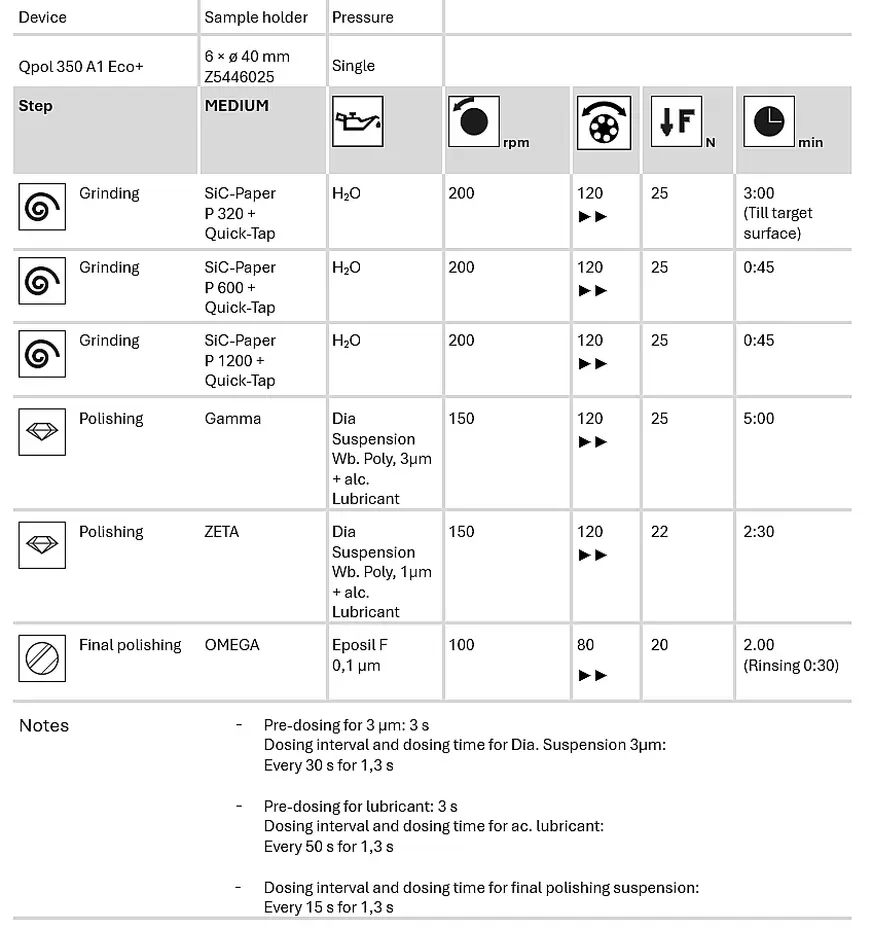
3. Grinding & Polishing

  • Challenges: plastic deformation, edge rounding, grain blurring.
  • Guidelines:
    • Start with the finest sandpaper possible → reduces damage depth.
    • SiC papers for controlled material removal, avoiding artifacts.
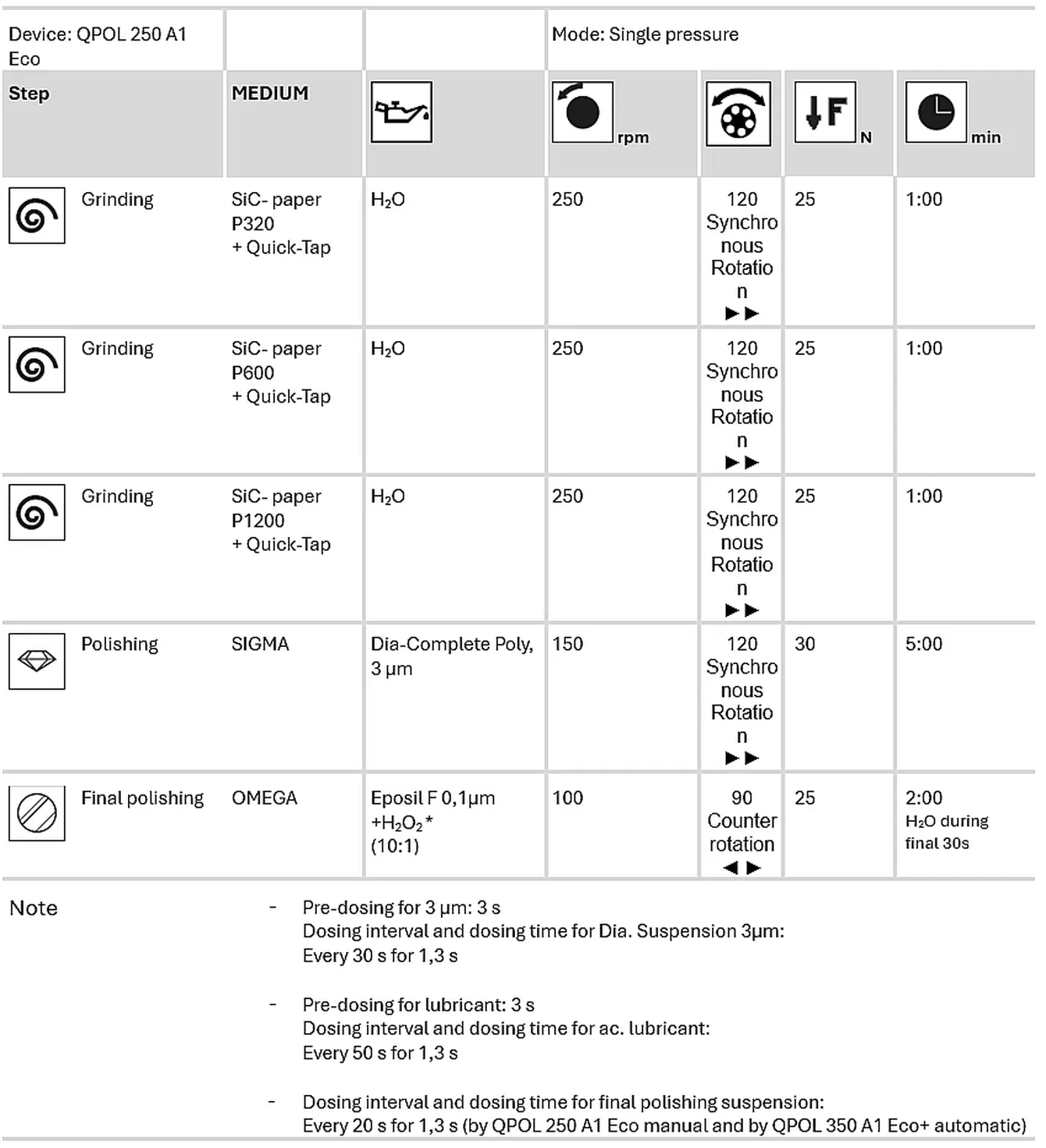
    • Diamond paste with lubricant (DiaComplete Poly) → fast, repeatable polishing.
  • Final stage: 98–90% Eposil F + 2–10% H₂O₂ → perfectly smooth surface without deformation.

llapplicationsknowledgebasepreparationcopperalloysgrindingpolishingcaption3


4. Etching

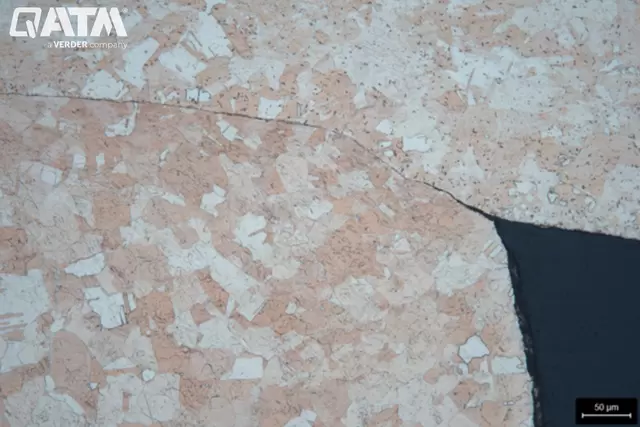
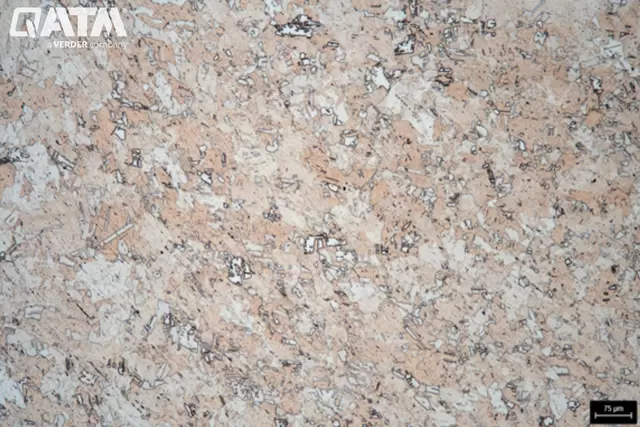
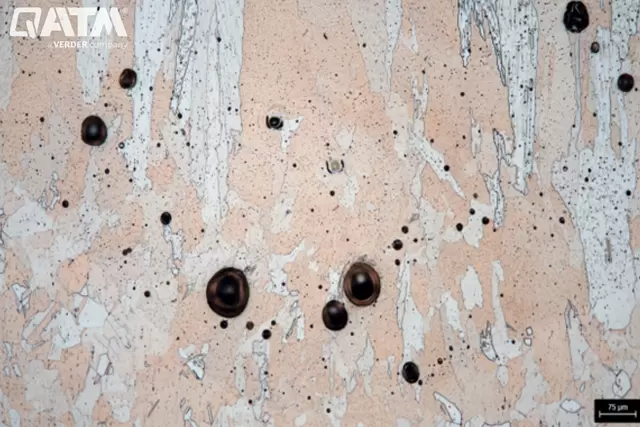
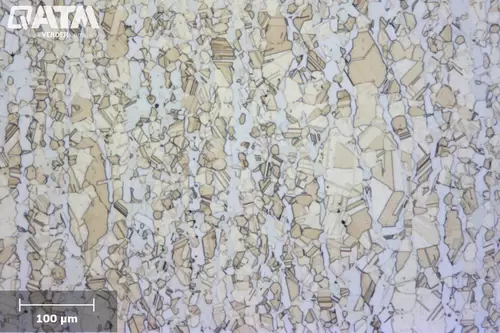
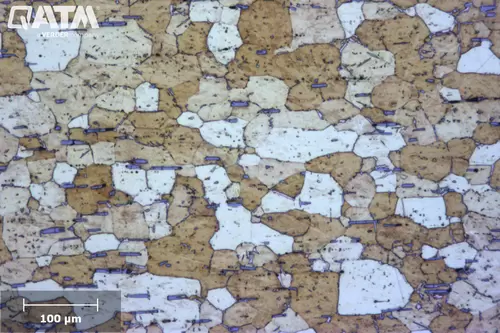
  • Goal: reveal grain boundaries, twins, secondary phases.
  • Common reagents:
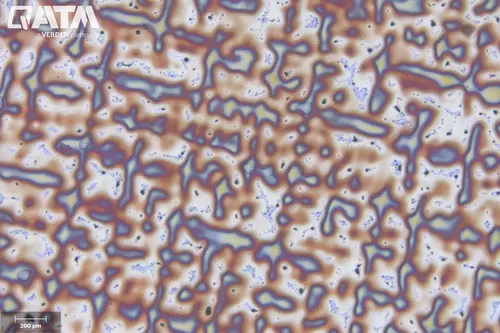
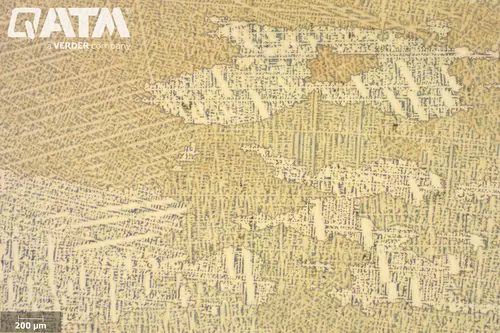
    • FeCl₃ + H₂O/ethanol → macrostructure, dendrites in brass & aluminum bronze.
    • HNO₃ + H₂O → grains, brass.
    • (NH₄)₂S₂O₈ + H₂O → grain boundaries, microstructure.
    • HCl + FeCl₃ + H₂O → beta phase in brass, bronze.
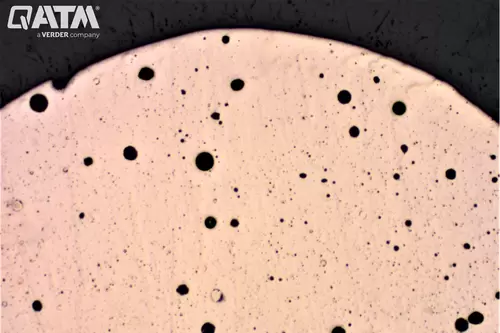
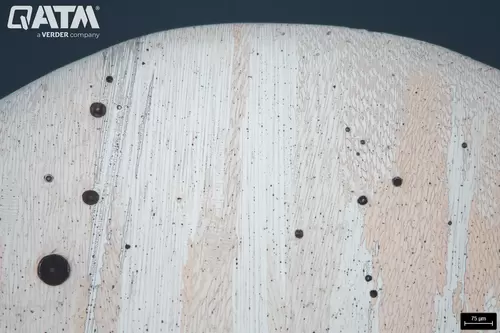
  • Special care with lead (Pb): reagents dissolve it, leaving voids → photograph before etching.

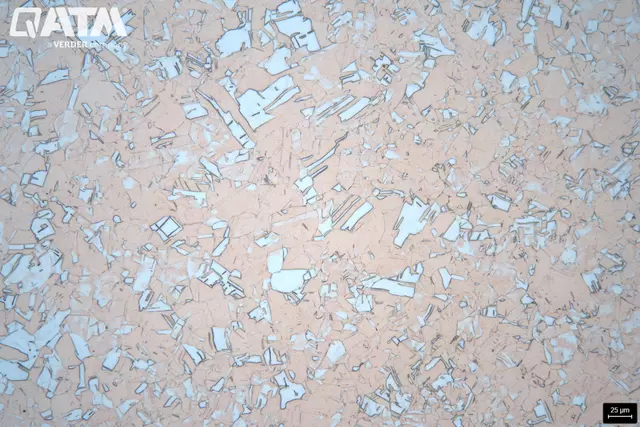
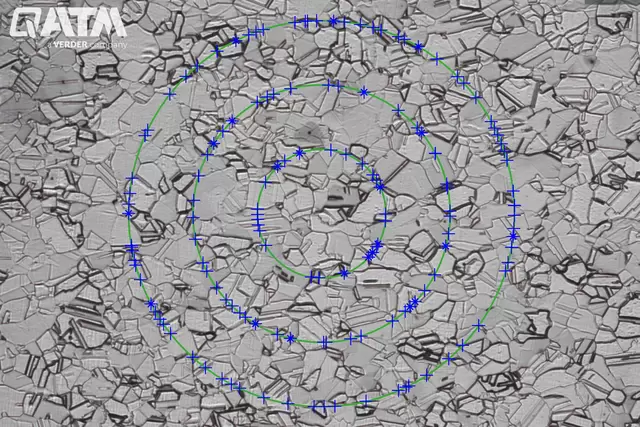
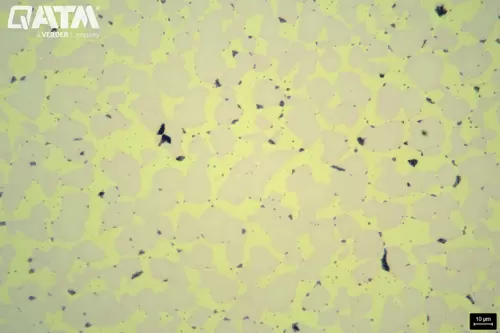
llapplicationsknowledgebasepreparationcopperalloysetchingcaption1llapplicationsknowledgebasepreparationcopperalloysetchingcaption2llapplicationsknowledgebasepreparationcopperalloysetchingcaption4llapplicationsknowledgebasepreparationcopperalloysetchingcaption3

5. Hardness Testing

  • Methods: Vickers (HV), Brinell (HB), Rockwell (HR).
  • Pure copper: 40–150 HV.
  • Copper alloys: up to 300 HV+ (depending on alloy, processing, heat treatment).
  • Critical for quality control and documentation of mechanical properties.

llapplicationsknowledgebasepreparationcopperalloyshardnesshl

In-Depth Insights

Copper is characterized by:

  • High thermal and electrical conductivity
  • Excellent corrosion resistance
  • Good formability and moderate strength

Property

Value

Unit

Atomic number

29

Atomic weight

63.546

Density

8.96

g/cm³

Melting point

1083.4

°C

Electrical conductivity (20°C)

< 60

MS/m

Thermal conductivity (20°C)

395

W/(m·K)

Specific heat

0.38

J/gK (20–400°C)

Enthalpy of fusion

214

J/g

Crystal structure

FCC (Face Centered Cubic)

Copper is one of the oldest metals used by humanity and remains critical in modern technology (electrical equipment, industry, energy). Today there are over 400 copper alloys, with continuous new developments.

Important Alloys:
  • Brass (Cu-Zn)
  • Bronze (Cu-Sn)
  • Cu-Ni, Cu-Al, Cu-Mn, Cu-Pb-Sn
  • Gunmetal (Cu-Sn-Zn)
Objectives of Copper Metallography
  1. Microstructure characterization → grain size, phase distribution, correlation with mechanical/electrical/corrosion properties.
  2. Phase identification → solid solutions, intermediate compounds, precipitates.
  3. Quality control → porosity, inclusions, cracks, inhomogeneities.
  4. Process effect assessment → casting, forging, rolling, annealing.
  5. Corrosion and degradation study → mechanisms, sensitive regions.
  6. Failure analysis → causes of cracking or operational failure.
  7. Homogeneity check → uniform alloy element distribution, segregation detection.

Metallography provides critical data for process optimization, quality assurance, and increasing the service life of copper components and alloys.

Metallographic Preparation of Copper – Cutting and Mounting

Cutting
  • Copper is soft and ductile, with a low annealing temperature (200–400 °C) → wet cutting is required to minimize heat and deformation.
  • Suitable wheels: SiC with resin bond (diameters 100–600 mm).
  • Cutting machines depending on sample size:
    • QCUT 150 A / 200 A → for small samples (tubes, thin profiles), with programmable feed.
    • QCUT 250 A → for medium samples (profiles, bars).
    • QCUT 400–600 A → for large samples (thick tubes, heavy components), capable of vertical and horizontal cutting.
  • Goal: minimal thermal stress, avoidance of microstructural alterations.

QCUT 150 A – Small Samples

Equipment

Cutting Wheel

Coolant

Clamping Tool

Qcut 150 A

SiC cut-off wheel 92004998

QATM-Standard

Clamping arm L, Mini vice L

 Cutting method: Vertical cutting (Y-axis)
Parameters:
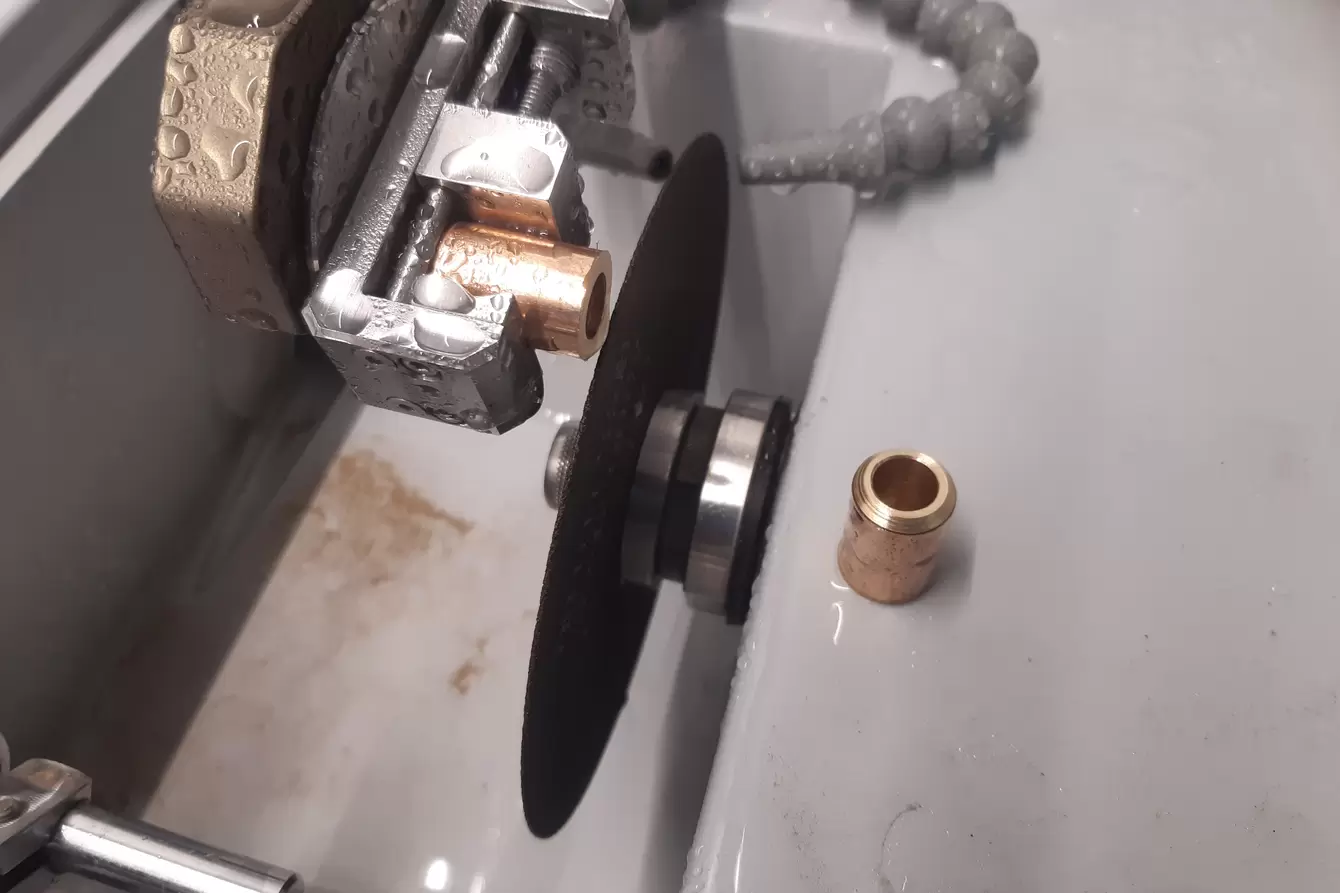
  • Feed rate: 0.1 mm/s
  • Pulse: none
  • RPM: 2500

1800x1200 pic 6 sample 31800x1200 pic 8 sample 3

QCUT 250 A – Medium Samples

Equipment

Cutting Wheel

Coolant

Clamping Tool

Qcut 250 A

NF-A SiC cut-off wheel 95012531

QATM-Standard 95014282

2 x Qtool 60, 2 x Easy-clamping base S, 2 x Universal vice piccolo 100

 Cutting method: Vertical cutting (Y-axis)
Parameters:
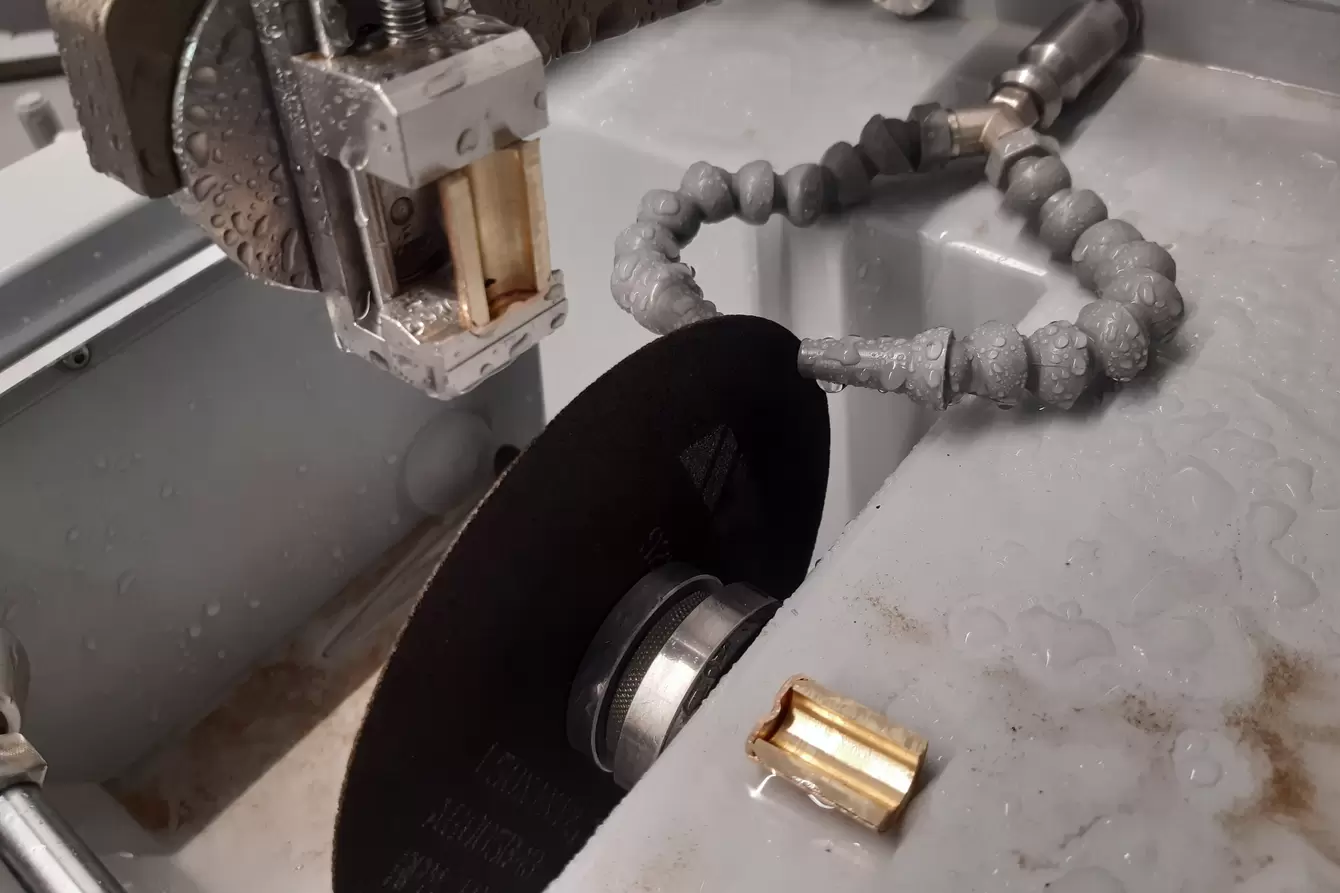
  • Feed rate: 0.7 mm/s
  • Pulse: +0.2 / -0.2 mm
  • RPM: 3015

1800x1200 schnitt 3 trennscheibe nf a vorschub 15mm s1800x1200 schnitt 5 versuchsaufbau 2 1 1

QCUT 400 A – Large Samples

Equipment

Cutting Wheel

Coolant

Clamping Tool

Qcut 400 A

Metal saw blade 400x2.5x32 mm

QATM-Standard

2 x Qtool 80–250 mm, 4 x Clamping jaw 70 mm slotted

Cutting method:

  • Cross-cut: Vertical (Y-axis)
  • Longitudinal: Horizontal (X-axis)

Parameters:

  • Cross-feed: 5.0–20.0 mm/s
  • Longitudinal feed: 5.0–10.0 mm/s
  • Pulse: none
  • RPM: 1000

1800x1200 copper cutting 0011800x1200 copper cutting 002

 
Mounting

Mounting is necessary when:

  • The sample is small, fragile, porous, or difficult to handle.
  • Multiple pieces need to be combined into one sample.
  • Sensitive surface layers must be preserved (e.g., coatings, oxides).
  • A stable shape is required for further processing (grinding, polishing).

Mounting Methods:

  1. Cold Mounting
    • Materials: resins (e.g., KEM 20, 2:1 mix).
    • Curing time: ~15 minutes.
    • Equipment: mixing cup, mold, pressure vessel → prevents bubbles.
    • Often preferred due to low thermal stress.
  2. UV Mounting
    • Material: UV 50, curing time ~1:30 minutes.
    • Used in PP molds.
    • Fast process, suitable for small samples.
  3. Hot Mounting
    • Rare for copper, because temperatures >190 °C can alter the microstructure (annealing).
    • Strict temperature control is required if used.

UV Mounting

Equipment

Ratio / Volume

Curing Time

Mold

Additional Equipment

QMOUNT with UV 50

1 component

1:30 min

Polypropylene Ø 40 mm

Notes:

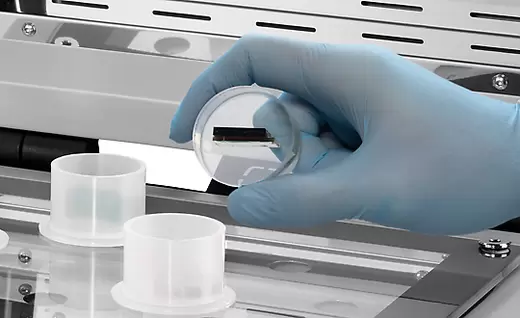
  1. Cover the sample with UV 50 and place in QMOUNT for 1:30 min.
  2. Place again in PP mold, fill with UV 50, and place in QMOUNT for another 1:30 min.

Cold Mounting

Consumable

Ratio / Volume

Curing Time

Mold

Additional Equipment

KEM 20

Powder : Liquid = 2:1

15 min

Polypropylene Ø 30 mm

Mixing cup, spatula, rod, pressure vessel

Notes:

  • Use a pressure vessel to prevent bubbles.
  • The sample must be secured (e.g., with glue or clips) to prevent tilting or floating.

llapplicationsknowledgebasepreparationcopperalloysextendedmountingcaptionllapplicationsknowledgebasepreparationcopperalloysextendedmountingtable2caption

Pure Copper

Pure copper is a metal with a deep red color (claret), often referred to as red copper or simply copper. It has a density of 8.92 g/cm³ and is classified among the heavy non-ferrous metals.
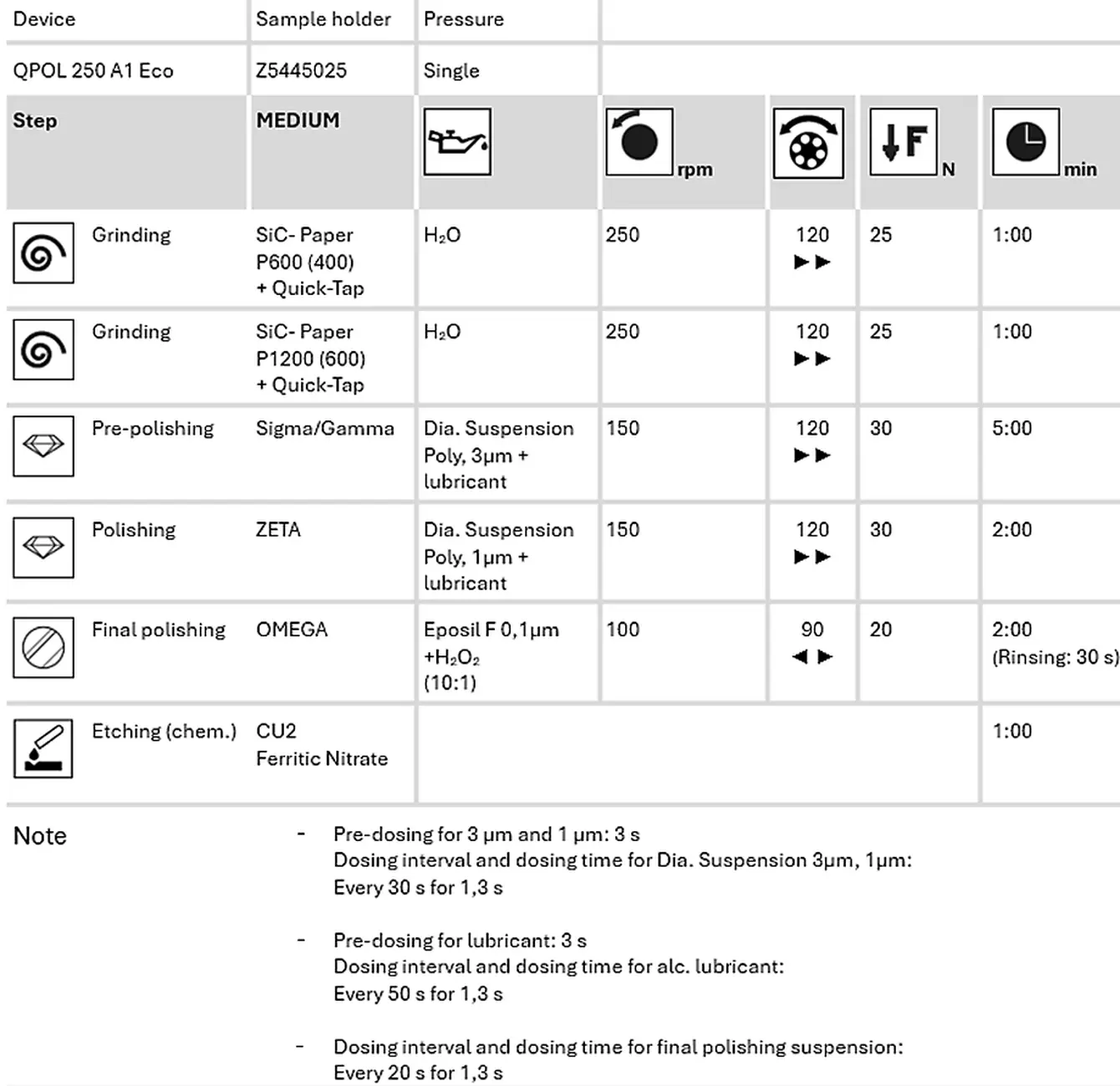
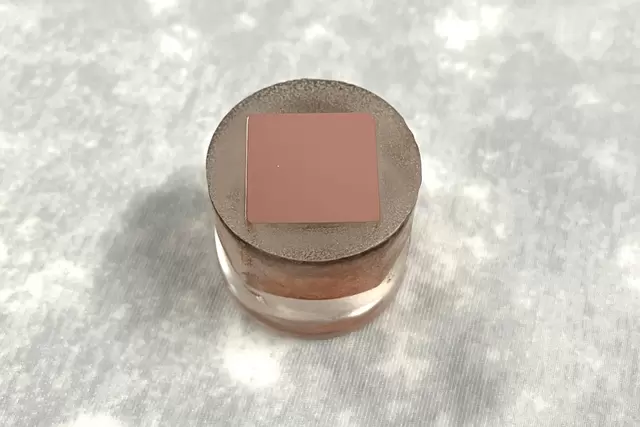
table cu2

Characteristics:
  • Excellent electrical and thermal conductivity, making it widely used in the electrical industry (coils, cables, conductors for generators and transformers).
  • Good corrosion resistance: in a moist environment, it forms a green protective patina (basic copper carbonate), which acts as a barrier against further corrosion.
  • Low hardness and strength, but high ductility, making it easily machinable by cold and hot working into sheets, strips, wires, and tubes.
Purity Grades:
Pure copper is designated by the chemical symbol Cu and a number:
  • Cu-1 = 99.95% purity
  • Cu-2 = 99.90% purity

llapplicationsknowledgebasepreparationcopperalloysextendedpurecoppercaption1llapplicationsknowledgebasepreparationcopperalloysextendedpurecoppercaption3llapplicationsknowledgebasepreparationcopperalloysextendedpurecoppercaption5

Copper Alloys

The properties of pure copper are not sufficient for many applications. The addition of alloying elements:
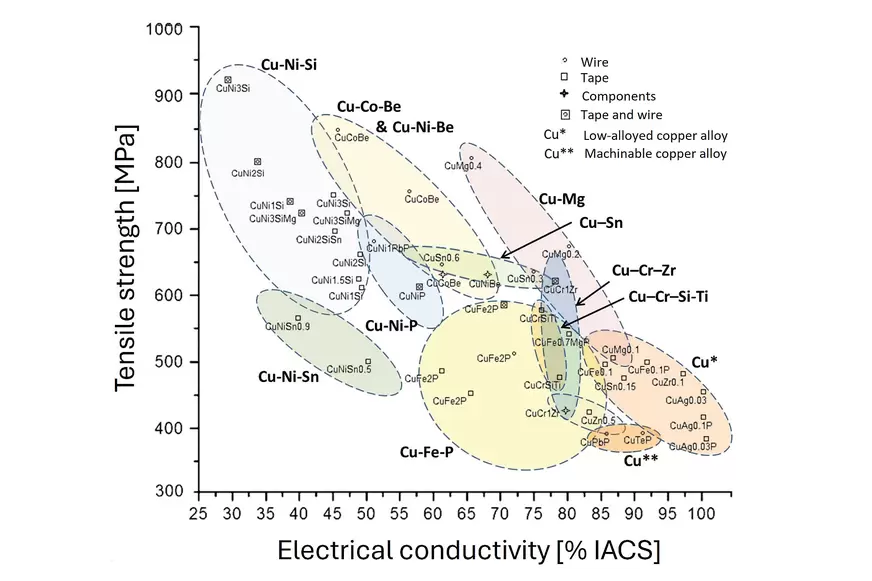
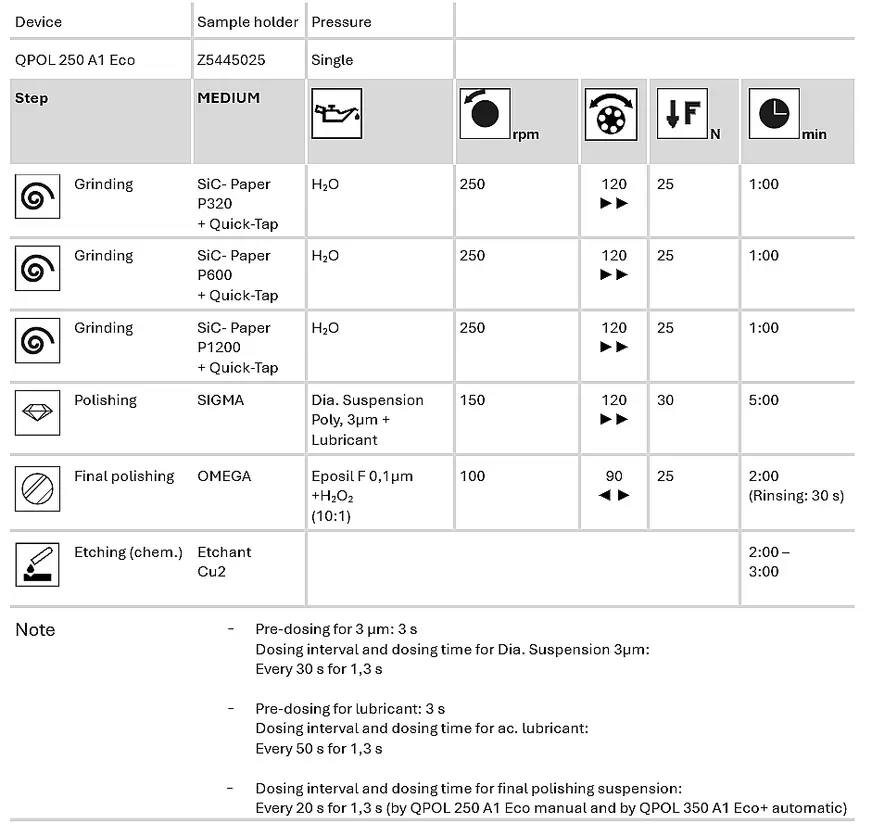
  • Significantly increases strength, corrosion resistance, wear properties, and machinability.
  • Can also change the color (e.g., with Ni, Sn, Zn).

llapplicationsknowledgebasepreparationcopperalloysextendedcopperalloyscaption1table cu3

llapplicationsknowledgebasepreparationcopperalloysextendedcopperalloyscaption6llapplicationsknowledgebasepreparationcopperalloysextendedcopperalloyscaption5llapplicationsknowledgebasepreparationcopperalloysextendedcopperalloyscaption4llapplicationsknowledgebasepreparationcopperalloysextendedcopperalloyscaption2llapplicationsknowledgebasepreparationcopperalloysextendedcopperalloyscaption11llapplicationsknowledgebasepreparationcopperalloysextendedcopperalloyscaption7llapplicationsknowledgebasepreparationcopperalloysextendedcopperalloyscaption9llapplicationsknowledgebasepreparationcopperalloysextendedcopperalloyscaption10

Copper in Electronic Components

Copper plays a crucial role in electronic components due to:

  • its excellent electrical conductivity,
  • high thermal conductivity,
  • and ductility.

It is primarily used in:

  • wiring,
  • printed circuit boards (PCBs),
  • connectors,
  • terminals of integrated circuits.

Copper ensures:

  • efficient transmission of electrical signals,
  • heat dissipation,
  • lower energy losses due to low resistance,
  • greater reliability and lifespan of electronic devices.

As technology advances and components shrink, copper remains a fundamental material supporting performance and innovation.

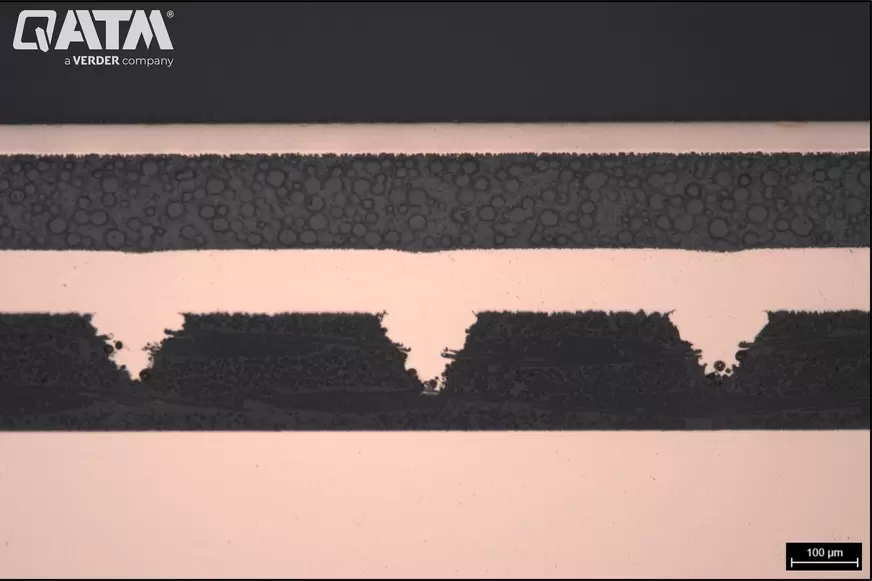
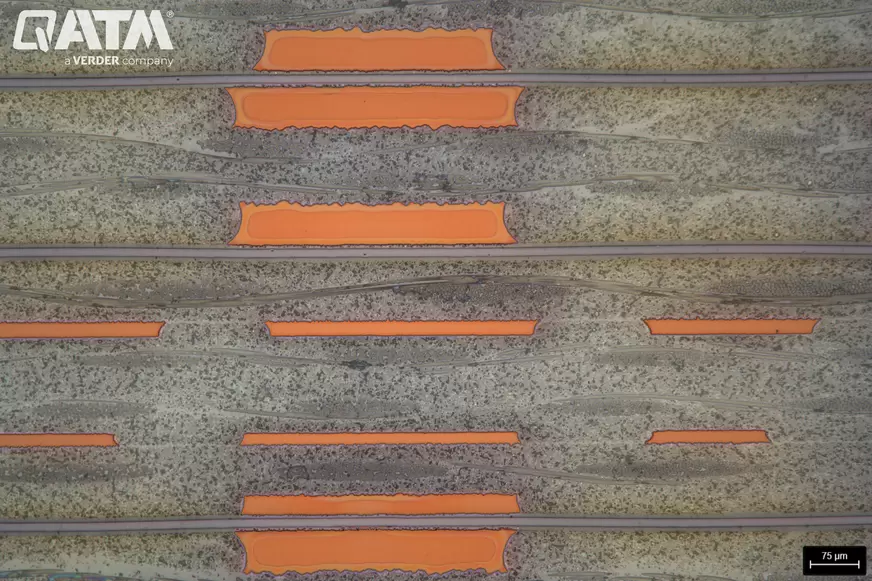
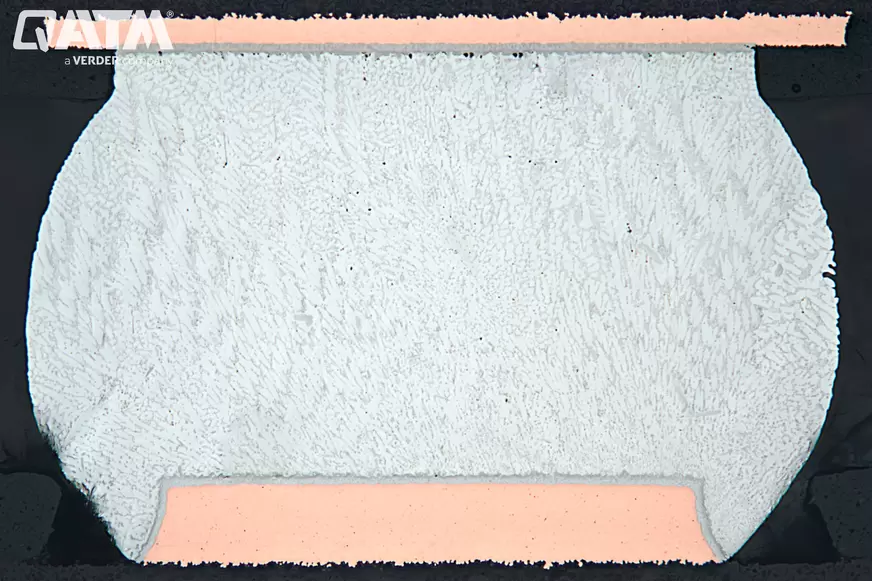
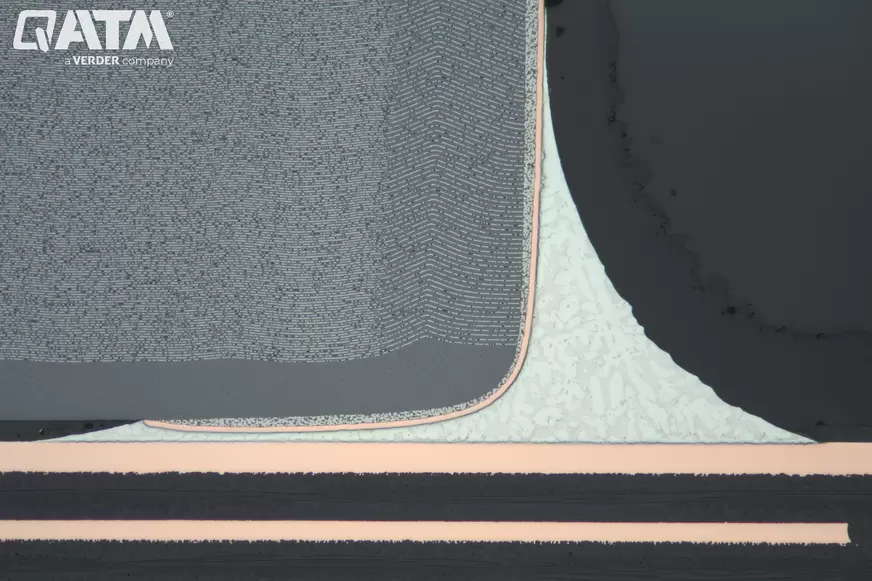
Metallographic Preparation of Electronic Components

There are two main objectives:

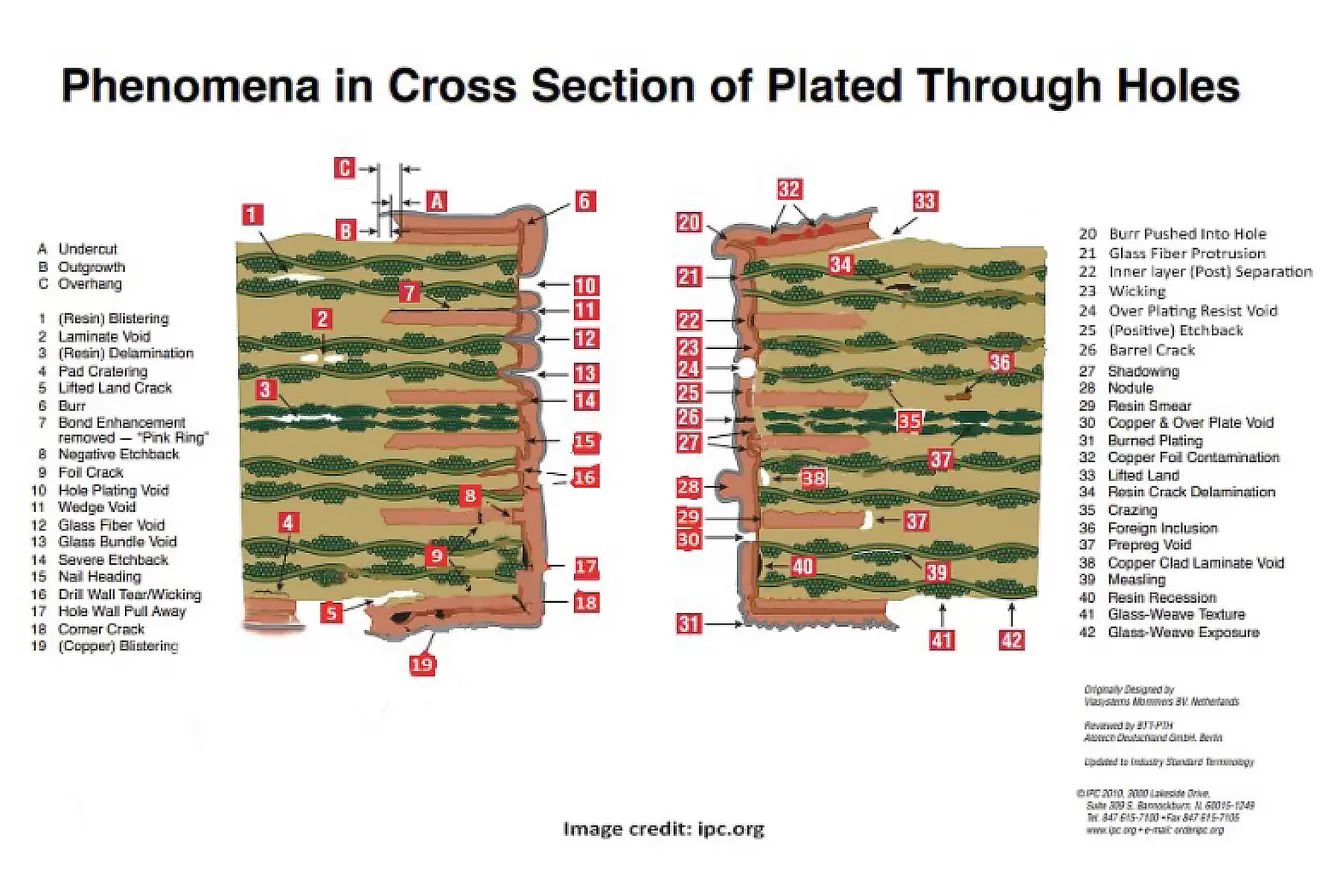
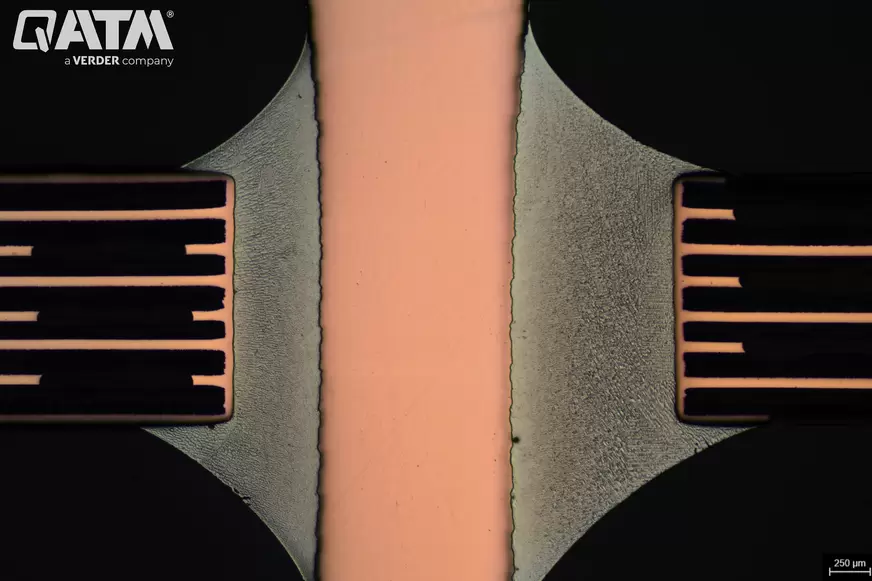
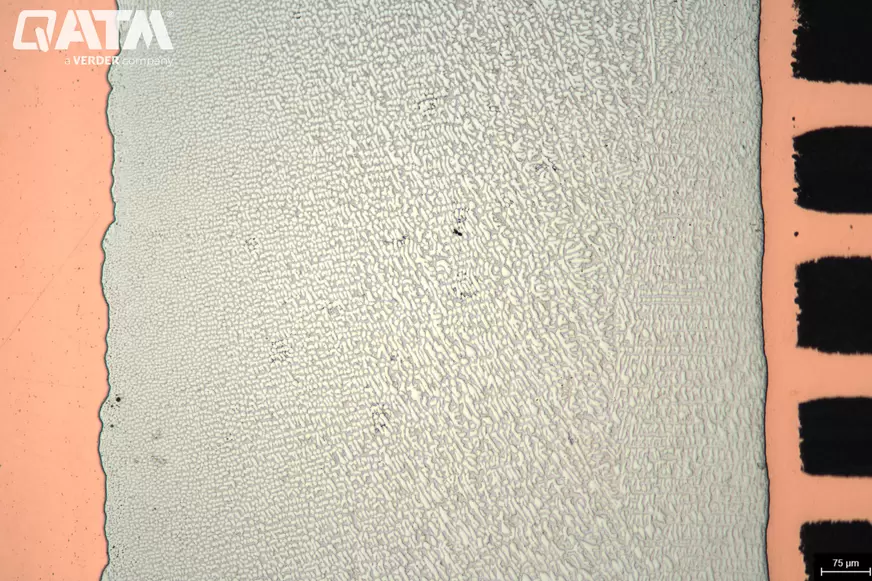
  1. Detection of potential defects in PCBs.
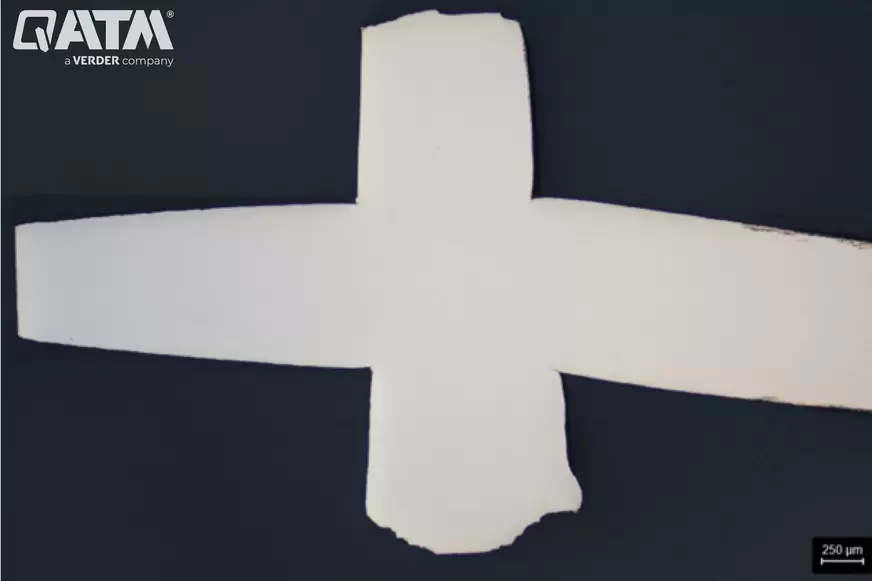
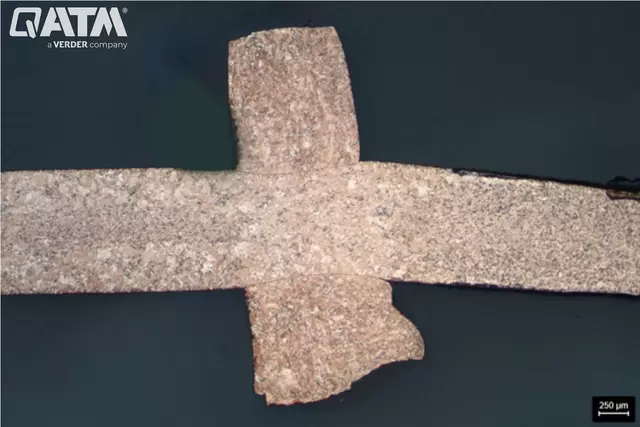
  2. Inspection of solder joints, microstructure of individual components, and connectivity between them at different production stages.

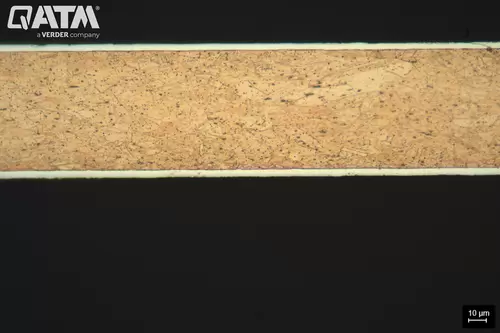
llapplicationsknowledgebasepreparationcopperalloysextendedcopperelectriccompocaption1table cu4

1800x1200 nach dem feinpolieren 25 xllapplicationsknowledgebasepreparationcopperalloysextendedcopperelectriccompocaption2llapplicationsknowledgebasepreparationcopperalloysextendedcopperelectriccompocaption3llapplicationsknowledgebasepreparationcopperalloysextendedcopperelectriccompocaption4

Vibration Polishing in Final Grinding

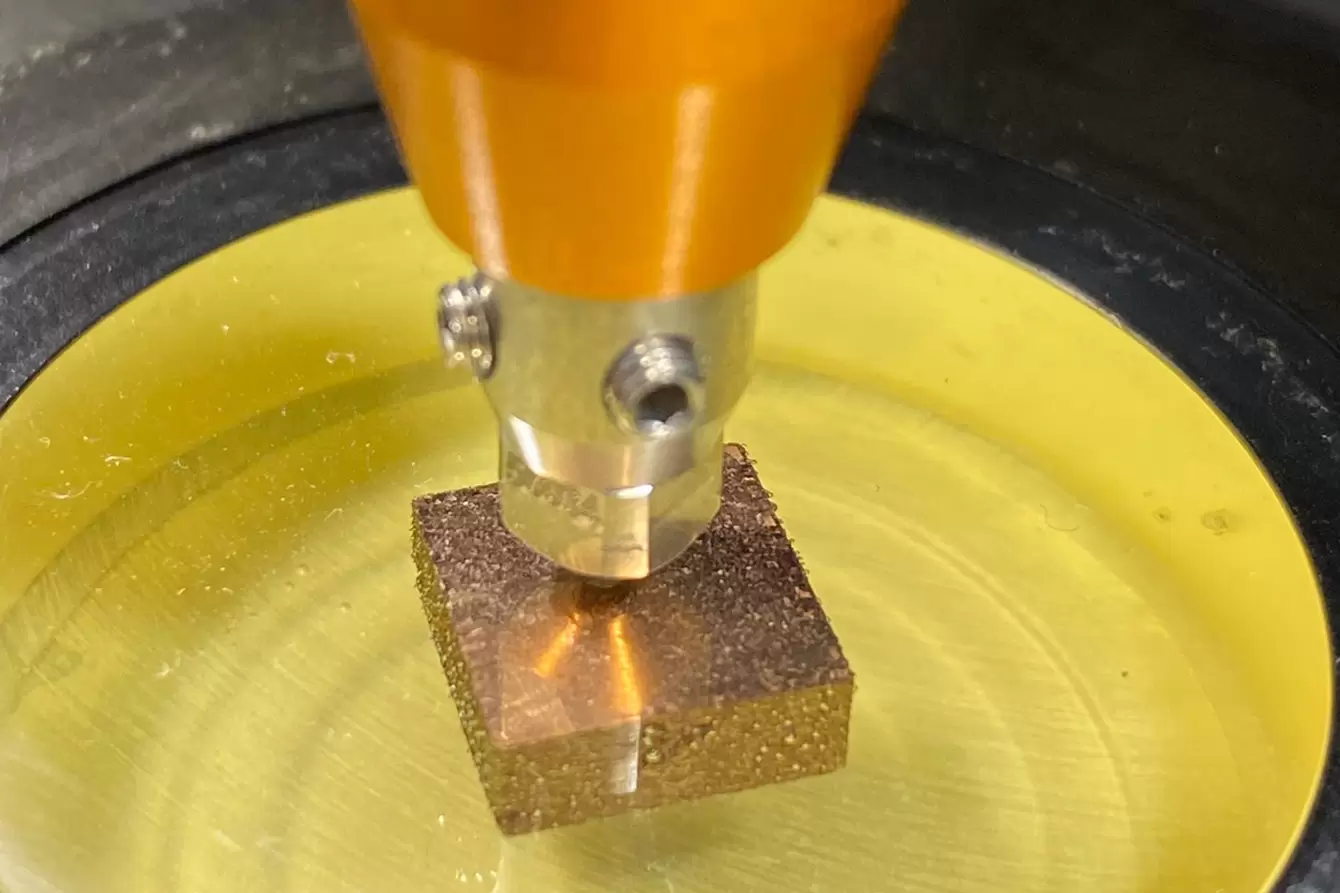
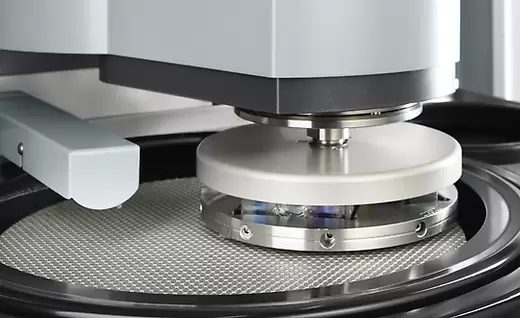
Simple final polishing is not always sufficient to avoid deformations and lines. In such cases, vibration polishing is applied:

  • Provides a smooth surface without deformation.
  • The vibration mechanism transmits energy in a controlled manner.
  • Prevents alteration of the microstructure due to deformation layers.

A Qpol Vibro device is used for near-zero deformation.
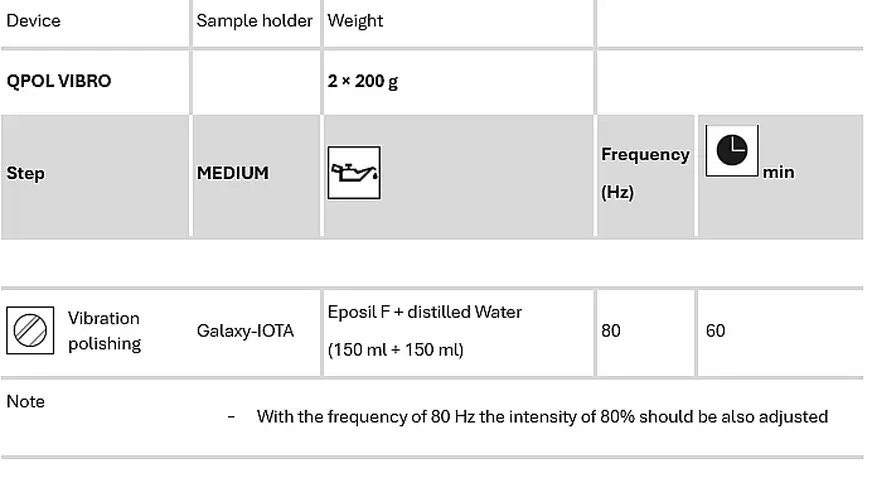
table cu5llapplicationsknowledgebasepreparationcopperalloysextendedcopperelectriccompovibratorycaption1llapplicationsknowledgebasepreparationcopperalloysextendedcopperelectriccompovibratorycaption2

FAQ – Metallographic Preparation of Copper and Copper Alloys

1. Why does copper require special care during preparation?
Copper is soft and ductile → easily develops surface deformation and smearing. Its high thermal conductivity complicates heat control during cutting.

2. How do copper alloys differ from pure copper in metallography?

  • Generally harder.
  • Contain more phases and different grain structures.
  • For example, brass and bronze require reagents that reveal phases.
  • Some alloys exhibit uneven etching or selective corrosion.

3. How is smearing reduced during grinding/polishing?

  • Fresh, sharp abrasive particles.
  • Low to moderate pressure.
  • Short polishing cycles.
  • Cleaning between stages + proper lubricant application.

4. What is the best way to reveal grain structure?

  • Mirror-like polishing.
  • Short etching with ferric chloride (FeCl₃) or ammonium persulfate.
  • Careful etching time and observation under bright field.

5. Which cutting wheel is suitable for copper?

  • Resin-bonded silicon carbide (SiC) wheel, e.g., QATM NF-A.
  • Especially for soft non-ferrous metals ≤ 300 HV.
  • Minimizes deformation and smearing.

6. Can copper corrode during preparation?
Yes. If it remains wet or exposed to air → corrosion occurs.
Rinse with ethanol + dry with warm air.
Use water-free lubricants wherever possible.

7. If lines from the 3 μm stage are still visible after final polishing, what should I do?

  • Clean polishing cloths with a brush + running water.
  • Rinse the sample and base again.
  • Repeat final polishing → avoid contamination.

8. Which grinding/polishing machines are suitable?

  • Copper and its alloys are difficult to prepare manually (issues with sample tilt, uneven material removal).
  • Semi-automatic or automatic machines such as QATM Qpol or Saphir series are recommended for repeatability and consistently flat surfaces.
Image

10, Agion Anargiron Str.
Marousi Attica, 151 24
Greece

+30 2107243529
[email protected]

QUESTIONS? SEND A MESSAGE