


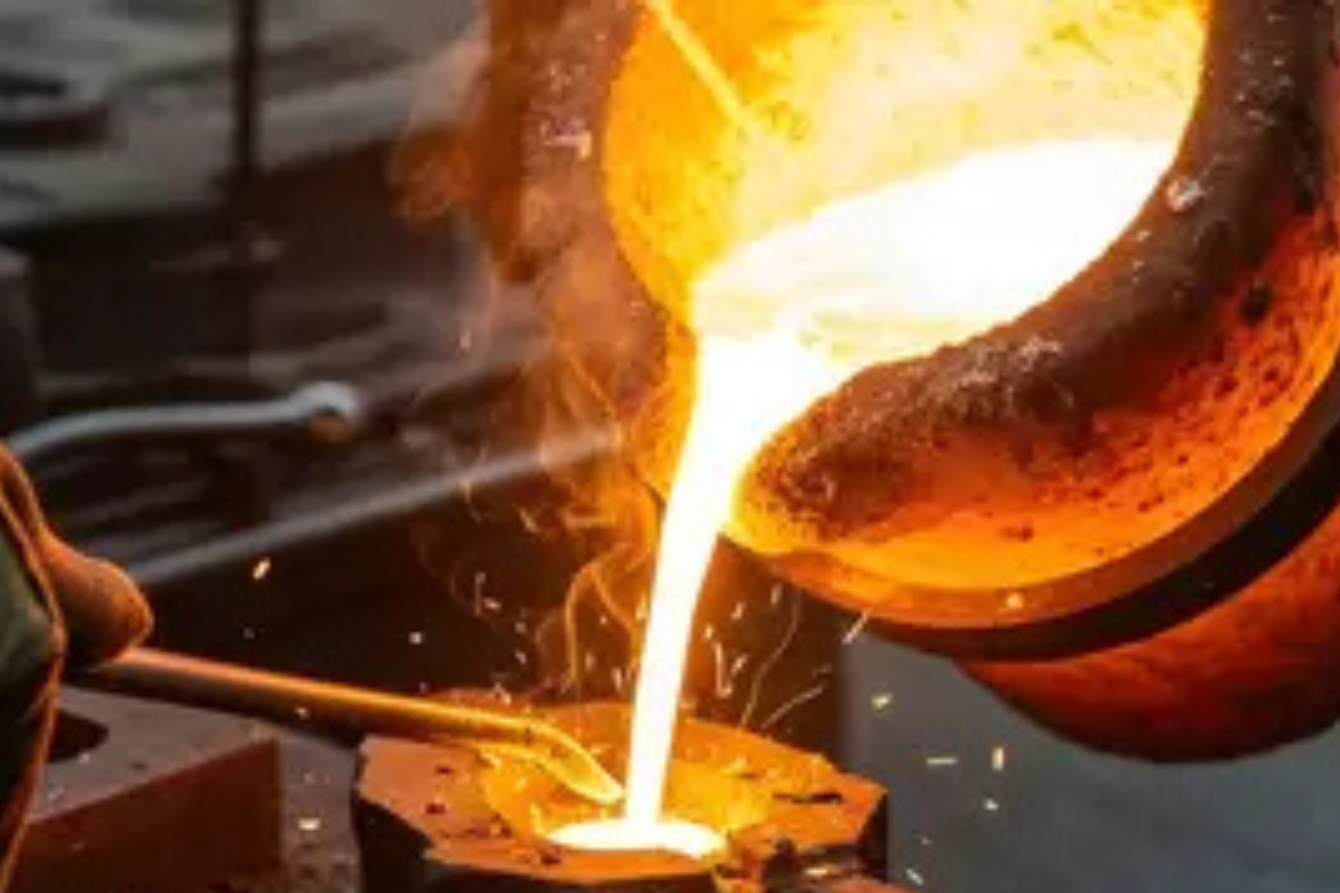
Cast iron is a family of iron-based alloys containing more than 2.06% carbon, typically around 3% carbon and 2% silicon, along with elements like manganese, phosphorus, and sulfur. It is mainly shaped through casting and can be classified according to the form of graphite it contains.
Gray cast iron (CJL) has lamellar graphite, offering excellent castability, vibration damping, good thermal conductivity, and easy machinability. Ductile iron (CJS) contains nodular graphite formed by adding magnesium or cerium, giving it high ductility and mechanical properties similar to steel. Compacted graphite iron (CGI; CJV) has worm-like graphite structures, achieved with smaller additions of magnesium or cerium, providing a balance between strength and thermal conductivity. White cast iron is unique in that it contains no free graphite.
Cast iron is recognized as a cost-effective material, with excellent castability and minimal shrinkage during solidification. However, it is brittle, has limited high-temperature strength, and cannot undergo plastic deformation. These characteristics make it suitable for large components like engine blocks, machine housings, crankshafts, building elements, as well as cookware and radiators.
Metallographic Preparation of Cast Iron
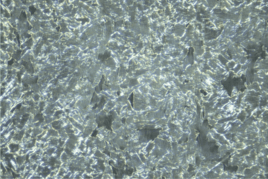
Metallographic preparation is crucial in quality control because the mechanical performance of cast iron is heavily influenced by the graphite’s morphology (e.g., shape and volume). Graphite characterization can often be performed directly on polished, unetched samples using standard reference charts or image analysis. To examine the iron matrix and its phases in detail, chemical etching is required. Accurate metallographic analysis is essential both for monitoring production and for ongoing material development and optimization.
Cutting and Mounting
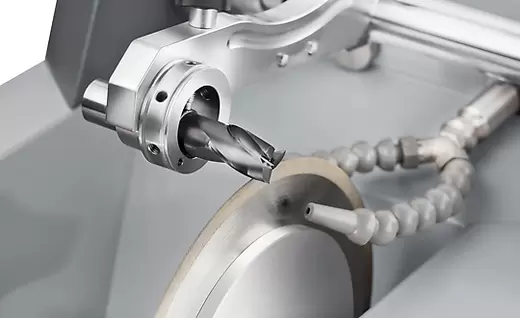
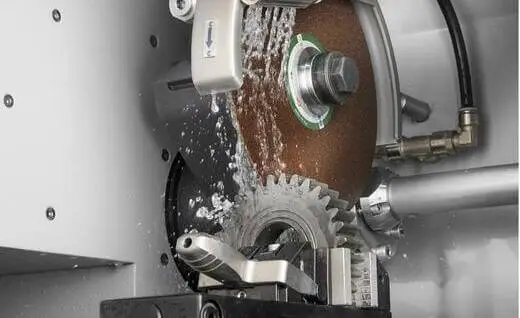
Because cast iron is brittle and relatively hard, careful sectioning is needed to prevent microstructural damage such as cracks, overheating, or graphite pull-out. The cutting approach depends on the type of cast iron:
To achieve clean, undamaged cuts, use a precision cut-off machine with sufficient coolant to prevent overheating, apply moderate feed pressure to avoid microcracks, and secure the sample firmly to eliminate vibration or movement.
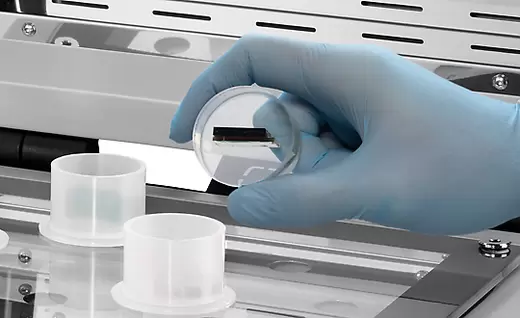
Mounting is advised for samples that require precise edge quality and consistent preparation, such as in failure analysis or detailed microstructural studies. For large specimens or routine quality control, unmounted preparation is often sufficient to save time and resources.
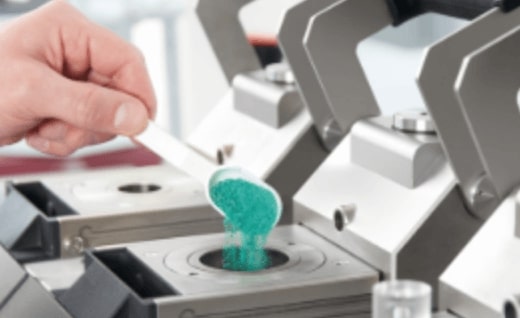
When mounting is needed, hot mounting is preferred for its speed and durability. EPO BLACK, a high-performance epoxy resin filled with minerals and glass, provides minimal gap formation, excellent edge retention, and high parallelism. Its high filler content also enhances machinability, which is particularly important for harder cast iron types. For standard applications, Bakelite is a cost-effective alternative.
Grinding and Polishing
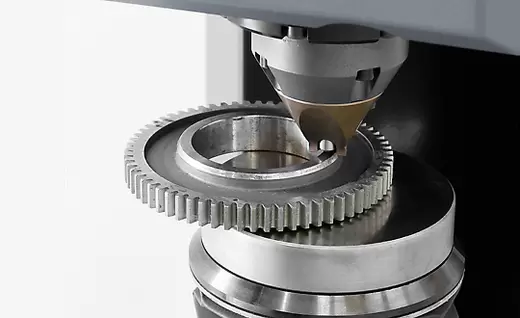
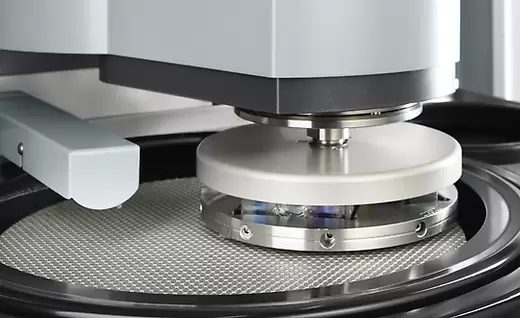
Careful grinding and polishing are crucial for revealing the microstructure of cast iron without causing deformation or damaging the graphite. The objective is to create a flat, scratch-free surface that maintains both the graphite morphology and the metallic matrix, allowing for accurate metallographic analysis. A suggested preparation method for CJS and CJL cast iron is provided in the corresponding table.
Since cast iron is susceptible to corrosion during and after preparation, cleaning should be performed promptly and carefully. Begin with a rinse using cold water but avoid leaving the sample in contact with water for too long. Immediately follow with a thorough rinse in ethanol and dry the specimen with warm air.
Note: Prolonged exposure to water can lead to corrosion.
Etching
When assessing the graphite morphology in cast iron, such as its shape, size, and distribution, etching is not required, because the graphite is already visible on a polished, unetched surface. However, chemical etching is necessary to examine the metallic matrix and the microstructural phases in more detail. A summary of commonly used etchants for cast iron is provided in the table below.
Safety Notice: Handle acids with care, wear appropriate protective equipment, and follow all laboratory safety protocols.

As part of its commitment to continuous information sharing and support of the technical community, Applied Laboratory and Engineering Solutions-AppLES shares scientific and technical information that contributes to a better understanding of metallographic processes. Through its expertise and the solutions, it provides in the field of metallography and laboratory equipment, the company aims to support industries and research laboratories in improving quality control procedures and materials analysis.
10, Agion Anargiron Str.
Marousi Attica, 151 24
Greece
Η Διοίκηση της Applied Laboratory & Engineering Solutions έχει καθορίσει και τεκμηριώσει την πολιτική της για την ποιότητα, βασισμένη στην εφαρμογή Συστήματος Διαχείρισης Ποιότητας κατά το διεθνές πρότυπο ISO 9001:2015 για τη δραστηριότητα της:
ΕΜΠΟΡΙΑ ΕΠΙΣΤΗΜΟΝΙΚΩΝ ΟΡΓΑΝΩΝ ΚΑΙ ΕΞΟΠΛΙΣΜΟΥ
Η Διοίκηση εξασφαλίζει ότι αυτή η Πολιτική Ποιότητας είναι κατανοητή, εφαρμόζεται και διατηρείται σε όλα τα επίπεδα.
Όραμα της Επιχείρησης είναι η αύξηση του μεριδίου της αγοράς και η ισχυροποίηση της ανταγωνιστικότητάς της προσφέροντας υψηλής ποιότητας προϊόντα.
Φιλοσοφία της Applied Laboratory & Engineering Solutions είναι:
Γενικές κατευθυντήριες οδηγίες:
Αθήνα, 12 – 09 – 2022
Η Γενική Διευθύντρια
Μαρία Λογοθέτη
The Management of Applied Laboratory & Engineering Solutions has defined and documented its quality policy, based on the implementation of a Quality Management System according to the international standard ISO 9001:2015 for its activities:
TRADE OF SCIENTIFIC INSTRUMENTS AND EQUIPMENT
Management ensures that this Quality Policy is understood, applied, and maintained at all levels.
The company’s vision is to increase its market share and strengthen its competitiveness by offering high-quality products.
The philosophy of Applied Laboratory & Engineering Solutions is:
General Guidelines:
Athens, 12 – 09 – 2022
The Director
Maria Logotheti